Built for city attorneys
Research, drafting, and review, cited to the line.
Mesa is the research coworker for the city law office. It reads the municipal code, the state’s statutes and case law, and the office’s own files, then returns answers, memos, and redlines with the citations attached.
Mesa can work a legal question through the code, the state’s statutes, and the case law above both at once. It reads the full text of every provision it relies on. Every conclusion arrives with the citations to check it.
Use cases
How city attorneys use Mesa
From research questions to ordinance drafts, each piece of work comes back with the citations that support it.
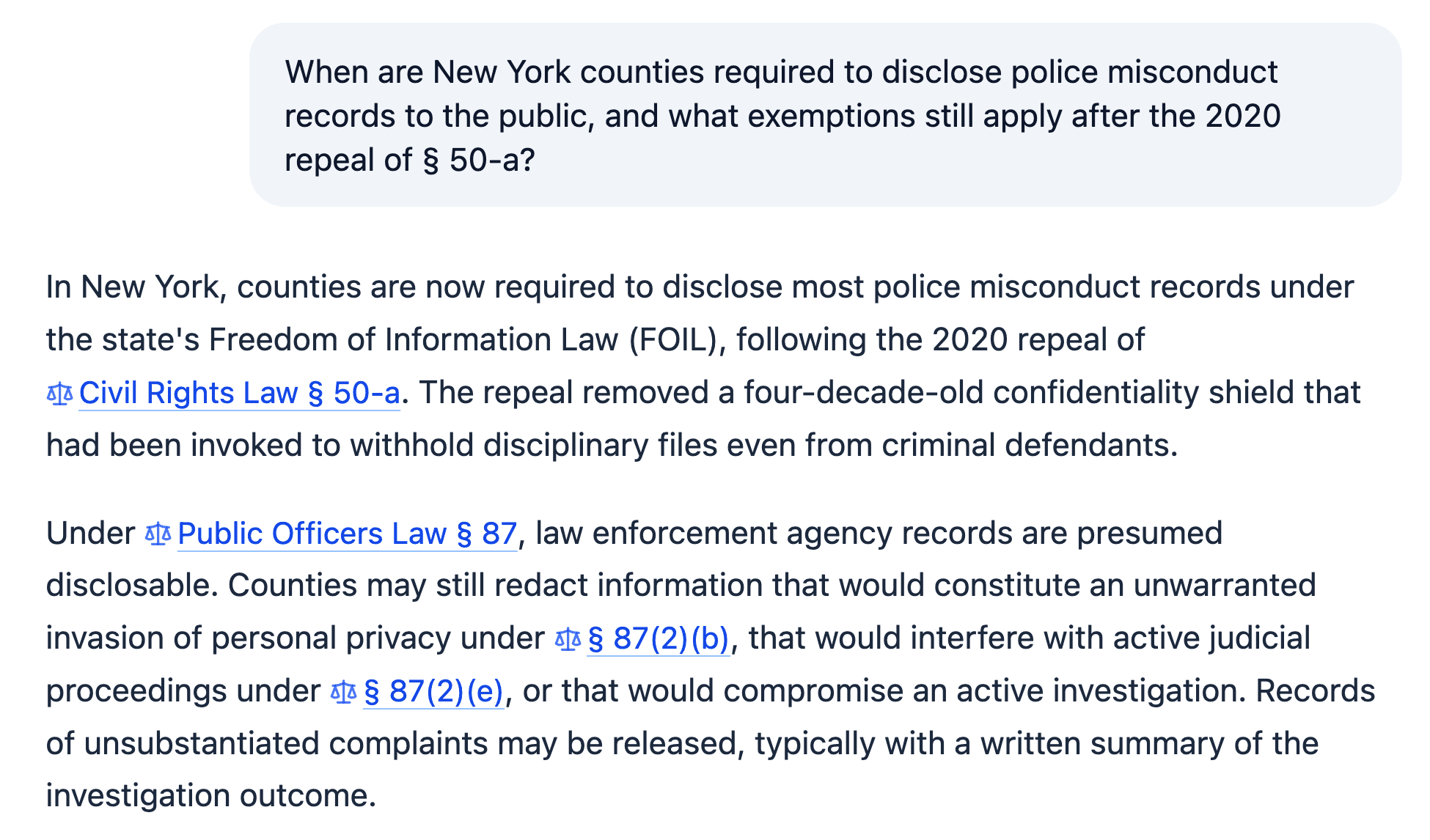
Mesa can answer plain-language legal questions from the municipal code, the state's statutes and regulations, and controlling case law: whether a use is permitted, what noticing a hearing requires, what options the council has. Every citation opens to the exact provision it rests on.
Confidentiality & governance
Treated like the privileged work it is.
A law office’s files and questions are sensitive by definition. Mesa is built so real matters can go through it without any doubt about where the data goes or how a conclusion was reached.
See the full security postureNever used to train AI
Customer data is contractually prohibited from training any model, whether Caldera's or any AI vendor's.
Access under the office's control
SSO, fine-grained roles, and vaults scoped to the organization decide who sees what.
An audit trail for the file
Every answer records the sources the agent consulted. The trail exports when a conclusion needs to be defended.
Verifiable by design
Every claim traces to the provision it came from, so review can rest on the law itself.
See Mesa work a real question.
A thirty-minute demo, run on the city’s own code and a live question from the office. We’ll show what Mesa can do with it.